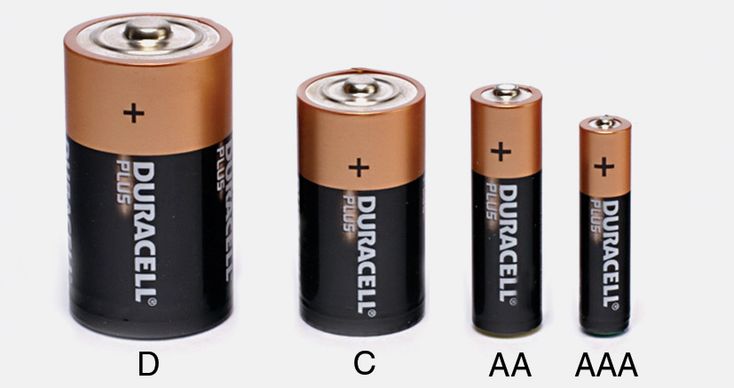
It’s easy to forget that before lithium technologies and high-tech rechargeables took over the world, the word “alkaline” was virtually synonymous with futuristic, unstoppable power. To truly understand the marvels—and the hidden dangers—of modern portable power, we first have to step back into the dark ages of the post-WWII era.
Before alkaline batteries became the household standard, the world relied on zinc-carbon batteries, which were ironically (and often tragically) branded as “Heavy Duty.” If you lived through that era, you know exactly how frustrating they were. Because the power dropped on a steep, steady curve, your flashlight spent most of its life emitting a pathetic, dim orange glow. Motorized toys and early portable electronics absolutely devoured them; you were lucky to get an hour of play on Christmas morning before the batteries gave up the ghost. Worse still was the dreaded leakage—if you left zinc-carbon cells in a radio or a drawer for too long, you were almost guaranteed to return to a ruined device choked by a crusty white paste.
Against that backdrop, the introduction of the consumer alkaline battery was like handing people alien technology.
When alkaline batteries hit the mainstream market, they didn’t just offer an incremental upgrade; they offered a complete paradigm shift. They lasted anywhere from five to ten times longer than the zinc-carbon dinosaurs. More importantly, they held their voltage much steadier over their lifespan, meaning a flashlight actually stayed bright until the battery was dead. To the consumers of the era, the word “alkaline” didn’t just mean a different chemistry—it meant freedom, reliability, and the advent of modern power.
Fast forward to today, and the baseline of consumer power is generally divided into two main camps. On one side, we have rechargeable lithium-ion batteries—the integrated, flat packs that power our smartphones, laptops, and electric vehicles. On the other side, the descendants of that great Alkaline Revolution (Zinc-Manganese Dioxide) remain the standard 1.5V household baseline for everything from TV remotes to wall clocks.
However, despite being cheap and ubiquitous, standard alkalines still have their flaws. Their voltage still drops steadily as they discharge. Under high-drain situations, their internal resistance causes them to sag and die prematurely. In freezing temperatures, their water-based electrolytes stall out. And yes, as they discharge and generate hydrogen gas, they can still break their seals and leak a corrosive mess into your favorite electronics—just like their zinc-carbon primitive siblings were infamously prone to.
Enter the modern upgrade: the non-rechargeable lithium battery, specifically Lithium Iron Disulfide (Li/FeS2). If you walk into a store today and choose lithium AAs over standard alkalines, you are buying a cell that runs circles around the alkaline standard in almost every metric:
The only real downside is the cost: lithium batteries are 2x to 4x more expensive than standard consumer grade alkaline batteries.
If standard lithium AAs are high-end consumer tech, there is another world of batteries hiding just out of sight. The battery industry has a terrifying habit of using standard consumer form factors (AA, AAA, C, D) as physical shells for wildly different, often highly specialized chemistries. To the untrained eye, they look like something you’d pop into a remote or a toy. In reality, putting one of these in the wrong device can result in melted plastic, blown bulbs, or fried circuit boards.
Welcome to the weird, wonderful, and deceptive world of batteries in disguise.
Take the Varta CR AA (or CR14505). It looks exactly like a AA battery, but it uses Lithium-Manganese Dioxide chemistry to output 3.0V—double the voltage of a standard AA. To make it even stranger, it features reversed polarity: the flat bottom is the positive terminal, and the familiar tip is the negative. Why does it exist? It’s an industrial-grade tool engineered for memory backups, sophisticated EKG machines, utility meters, and dive computers. Featuring a laser-welded seal and an incredibly low self-discharge rate (less than 1% per year), it’s built to survive extreme temperatures and last over a decade untouched.
Disguised as standard AA and AAA batteries, these are actually high-drain rechargeable Lithium-ion batteries. They use the exact same chemistry as your smartphone, meaning they output a massive 3.7 volts (peaking at 4.2V right off the charger). Flashlight enthusiasts love them to push custom electronics to blindingly high lumens. But if you accidentally slip a 14500 into your wireless mouse, it will instantly fry the electronics with more than double the intended voltage.
Hiding in AA, C, and D form factors, this 3.6V industrial battery features a chemical trick called passivation. When sitting idle, a thin layer of lithium chloride forms on the anode, acting like a physical shield that stops the battery from discharging itself. Because of this, they can sit on a shelf for 20 to 40 years. If you try to use one after a decade, it acts “dead” until the device draws enough current to smash through the shield and “wake up” the battery. They are strictly designed for deep-space equipment and smart utility meters.
Standard rechargeable NiMH batteries (like Eneloops) run at 1.2V, which can make sensitive electronics instantly complain about a “low battery.” NiZn batteries, disguised as AAs, were designed to fix this by offering a nominal 1.6V. However, right off the charger, they can push out 1.85 volts. Put four freshly-charged NiZn batteries into a vintage 6V flashlight, and the combined 7.4 volts will blow the incandescent bulb like a tiny flashbang.
These modern marvels are a masterclass in deception. Inside a standard AA shell lies a tiny 3.7V Lithium-polymer pouch, a microscopic circuit board (a buck converter), and a USB port. The circuit artificially steps the power down to a perfectly flat, unwavering 1.5V. When the battery dies, you don’t put it in a wall charger; you literally plug a USB-C cable directly into the side of the battery. Because the chip strictly regulates the output, your device will show “100% battery” right up until the exact millisecond it is depleted, at which point the screen simply goes black.
With all of these incredibly advanced chemistries, microchips, laser-welded seals, and passivation layers crammed into the shape of a simple AA battery, you might be wondering what the ultimate specialized battery looks like.
It is the Dummy Cell.
Disguised as a standard AA or AAA, it is nothing more than an empty plastic shell with a wire running from the positive to the negative terminal. Yeah, you got it right, this is not a battery at all, it’s essentially a connector in disguise.
Why would you ever pay money for a short-circuit posing as a battery? Well, you might if you wanted to safely use the aforementioned “Device Assassins.” If you have a flashlight that takes two AA batteries (requiring 3.0V total to operate), you can insert one 3.7V 14500 cell into the first slot, and a 0V Dummy cell into the second slot. The device receives roughly the right amount of voltage to run on overdrive, while the dummy cell quietly sits there, carrying the current and completing the circuit.
And so, at the absolute bleeding edge of high-voltage portable power, the most vital tool in an enthusiast’s kit is, quite literally, a piece of wire inside a plastic case.